How to Recognise and Treat a Stroke
A stroke can happen to anyone, of any age, at any time. It's vital to know how to spot the signs of a stroke in yourself or someone else.
A stroke happens when the blood flow to the brain disrupted by either a blocked or a ruptured blood vessel. A stroke is a medical emergency that requires immediate attention as every minute is vital. If you experience or spot any of the below, don’t wait. Call 999 straight away.
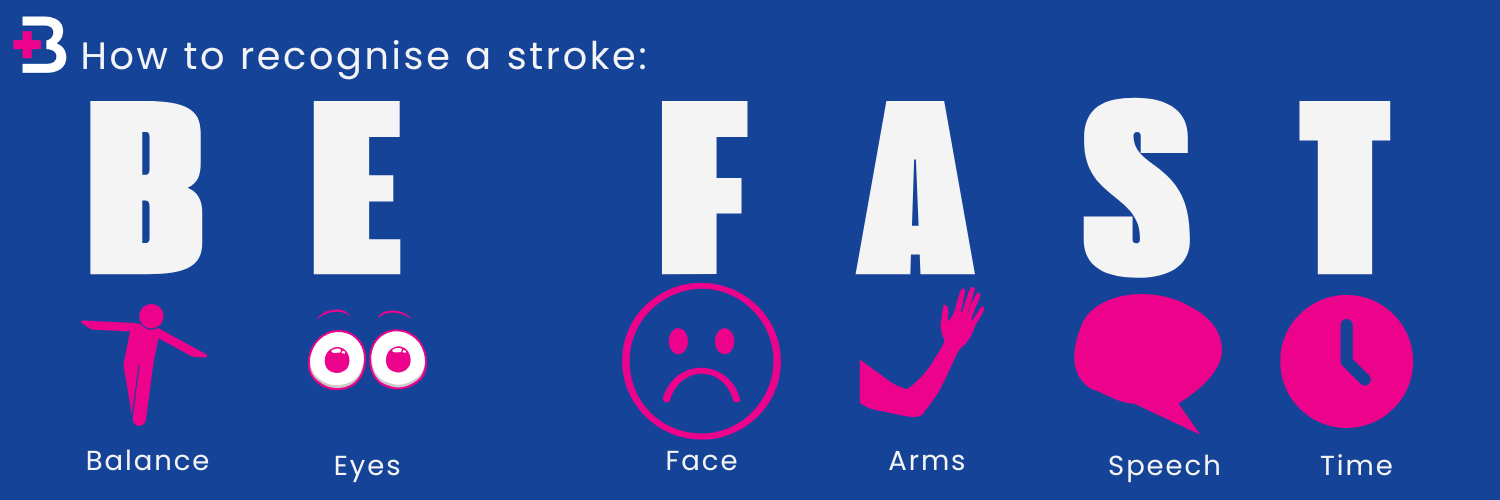
The BEFAST acronym (Face, Arms, Speech, Time) is a test to quickly identify the most common signs of stroke.
- Balance: Sudden loss of balance or co-ordination
- Eyes: sudden vision changes of loss of vision
- Face weakness: Can the person smile? Has their mouth or eye drooped?
- Arm weakness: Can the person raise both arms fully and keep them there?
- Speech problems: Can the person speak clearly and understand what you say? Is their speech slurred? Do they understand you?
- Time to call 999: if you see any one of these signs. Time is crucial when treating a stroke.
“Time loss is brain lost”
Treatment
Call 999/112 imediately and inform them of a suspected stroke
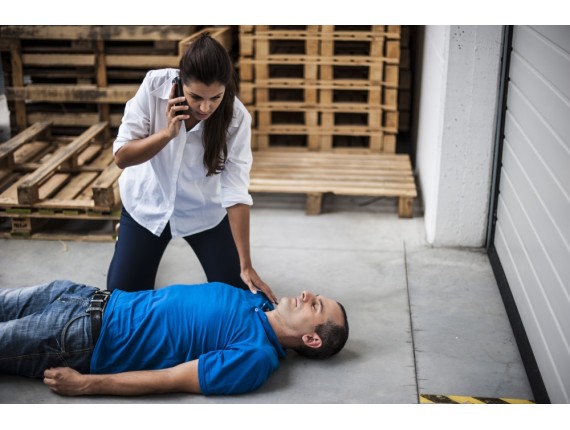
If the casualty is conscious: Lay them down with head and shoulders raised, monitor airway/breathing, reassure and keep the casualty calm
If the casualty is unconscious: Place the casualty in the recovery position with affected side down, monitor and maintain airway and breathing.
Stay with the casualty until the emergency services arrive and be prepared to begin resuscitation if required.